


How AI Could Shape the Future of Tech
To say Artificial Intelligence is the tech trend of the future would likely be an understatement. AI continues to transform various industries rapidly, and tech is no exception. A Stanford report found that 78% of businesses used AI in 2024, a 55% increase from 2023. This number is expected to grow throughout 2025 and into 2026.
Understanding where AI fits into the future of tech is also important for job seekers looking to stay up-to-date on AI’s role in the future of work. Although estimates vary, AI is expected to fully automate 30% of current U.S. jobs and could affect a further 60%. In this guide, we’ll explore how AI might affect job opportunities, skill requirements, and career development in the tech industry.

The Future of AI in Business Software Development
One of the biggest benefits of AI when looking at the future of tech is its ability to automate repetitive tasks. This is especially true in the custom software development space, where teams can now save valuable time on projects.
Ideation and Brainstorming
For many, the future of AI in business starts at the ideation stage. With several tools out there that can save you an hour or more each day with tasks such as research, it’s a no-brainer. In the technology and software industry specifically, chat tools such as ChatGPT, Codeium, TabNine, and others make excellent pair programming companions.
Engineers, architects, programmers, and anyone in between can use these tools to brainstorm new ideas, technologies, programming techniques, and approaches they may not have otherwise considered. This helps your team supercharge its decision-making, training, and solutions.
The Coding Phase
One of the most significant tech trends of the future is automated coding. AI-powered tools can now write code faster and more efficiently than ever before. Now, will this mean your coding job will disappear entirely? Probably not. For new job seekers, this means that proficiency with AI tools and frameworks could become a valuable skill, complementing traditional coding abilities.
These AI-powered tools could reshape the future of tech by continuously optimizing themselves. They analyze existing codebases, learn from them, and even generate new code that meets specified requirements.
Project Management
The future of AI in business also applies to the management side of projects, too. AI tools can predict project timelines with greater accuracy by analyzing historical data and identifying potential bottlenecks. They even assist with the more efficient assignment of tasks, helping managers keep projects flowing.
Are you looking for a job in project management? Aspiring project managers should familiarize themselves with AI-driven project management software such as Asana, Trello, Jira Insights, and others to enhance their job prospects.
Will AI Replace Software Engineers?
We know that AI’s role in the future of tech will continue to expand. However, will this spell the end of the road for employed engineers? The good news is, probably not. Yes, AI can automate repetitive tasks, but it’s unlikely to replace human engineers entirely. For all of its benefits, AI still has significant limitations that require human attention.
Job seekers should focus on developing skills that AI cannot easily replicate, such as problem-solving, creativity, and domain-specific knowledge. Job seekers will rarely be prompted or allowed to use AI to write their code. Engineers still need to know how to write code manually, especially during the interview phase.
AI and the Future of IT Staffing
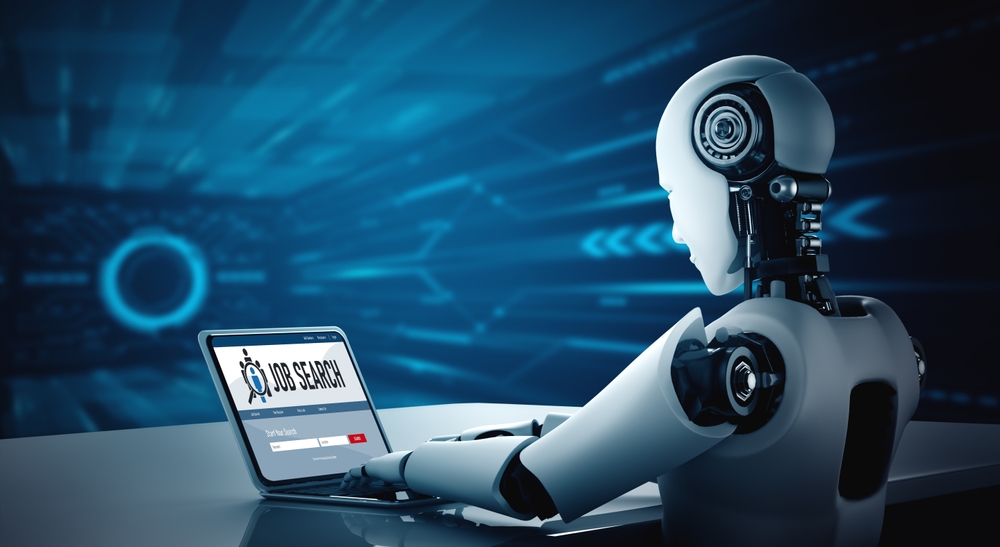
Another element of the business world where AI is playing a role is IT staffing. Advanced algorithms are a tech trend of the future, screening resumes and identifying the best candidates based on specific criteria. For job seekers, this underscores the importance of optimizing resumes with relevant keywords and experiences to pass through AI screening systems effectively.
For HR and training staff at tech companies, AI is also positioning itself as a key part of the future. Personalized training programs powered by AI can adapt to individual learning styles and progress, ensuring employees acquire the necessary skills more efficiently. Job seekers should be open to continuous learning and adaptability, as AI-driven training becomes more prevalent.
If your business is looking to bring its next AI tool or software application to life, our team of technology consultants is here to help at every step. Contact us today to see how SOLTECH is capitalizing on the biggest tech trends of the future.
FAQs
What is the future of tech?
The future of tech likely lies in automation, immersive experiences, and creative integrations of AI. These innovations can enable smarter decision-making at the business level and give users more personalized interactions with their favorite products.
What is the future of tech jobs?
As AI evolves, so will tech jobs. Roles focused on AI, cybersecurity, data science, and human-tech collaboration will grow, while repetitive tasks will continue to be automated over time.
How will the future of AI change technology?
AI continues to revolutionize the tech industry. It can power real-time insights, predictive systems, and even autonomous decision-making. From the healthcare space to finance, AI can shift tools from reactive to proactive.

Thayer Tate
Chief Technology Officer Thayer is the Chief Technology Officer at SOLTECH, bringing over 20 years of experience in technology and consulting to his role. Throughout his career, Thayer has focused on successfully implementing and delivering projects of all sizes. He began his journey in the technology industry with renowned consulting firms like PricewaterhouseCoopers and IBM, where he gained valuable insights into handling complex challenges faced by large enterprises and developed detailed implementation methodologies.
Thayer’s expertise expanded as he obtained his Project Management Professional (PMP) certification and joined SOLTECH, an Atlanta-based technology firm specializing in custom software development, Technology Consulting and IT staffing. During his tenure at SOLTECH, Thayer honed his skills by managing the design and development of numerous projects, eventually assuming executive responsibility for leading the technical direction of SOLTECH’s software solutions.
As a thought leader and industry expert, Thayer writes articles on technology strategy and planning, software development, project implementation, and technology integration. Thayer’s aim is to empower readers with practical insights and actionable advice based on his extensive experience.
Recent Posts
Search